History of each marathon
BMW Berlin-Marathon
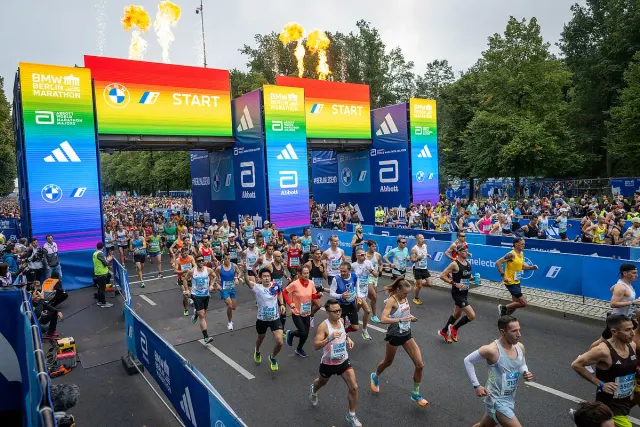
The BMW BERLIN-MARATHON held its 51st edition in 2025 and has been an Abbott World Marathon Major since 2013. Horst Milde launched the first race in 1974 with 286 finishers; today organiser SCC EVENTS runs one of the world's largest marathons. In 27.6 °C heat, Sabastian Sawe won in 2:02:16 — the ninth-fastest marathon ever and the quickest in such high temperatures. With 48,351 runners finishing, Berlin remains Germany's largest marathon.
Mainova Frankfurt Marathon
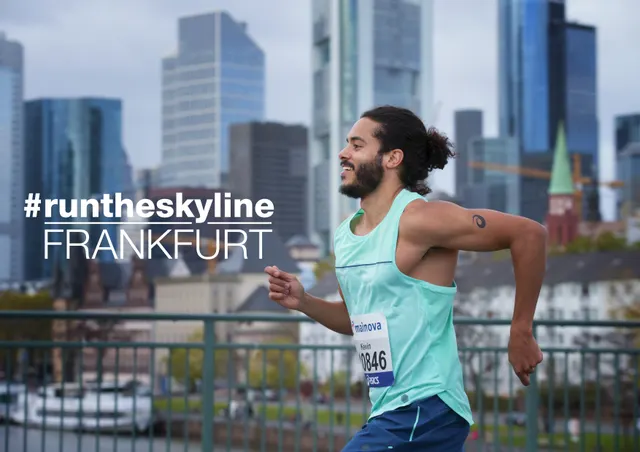
Germany's oldest city marathon debuted in 1981 with 258 entrants and has finished inside the trade-fair hall for decades — the indoor finish is iconic. The course is one of Europe's fastest with just 27 metres of elevation gain; Wilson Kipsang ran 2:03:23 here in 2013. In 2025, 17,000 runners entered the marathon distance — a sell-out. Buze Diriba won in 2:19:34, becoming the first woman under 2:20 in Frankfurt.
HASPA Marathon Hamburg
The HASPA Marathon Hamburg has been Germany's largest spring marathon since 1986, crossing the Elbe bridges, Alster lakes and Speicherstadt. In 2026 the race marked its 40th edition; Samuel Fitwi won in 2:04:45. 15,575 runners started the marathon distance and 15,525 reached the finish at Landungsbrücken.
Generali Köln Marathon
Since 1997 the Cologne Marathon has turned the cathedral city into a race stage on the first Sunday in October — with carnival spirit along the route. Relay teams start alongside individual marathoners; only the 42.195 km count applies here. In 2025, 10,683 runners started the marathon distance and 7,938 finished per official timer Race Result. The race has been AIMS-certified since 2019 and belongs to the SuperHalfs series.
MARATHON MÜNCHEN by Brooks
Munich's city marathon dates to 1983; in 2025 Laufstatt Event gGmbH took over after a municipal tender — upheld by the Bavarian Administrative Court. The new loop course runs from Sendlinger Tor via Marienplatz to the Olympiapark. 6,500 marathon starters and 5,196 finishers set records under the new organiser in 2025. Gabriel Lautenschlager (MTV Bamberg) won in 2:18:28 — the first Bavarian winner in years.
ADAC Marathon Hannover
The Hannover Marathon began in 1989 as the TUI Marathon and is now known as the ADAC Marathon Hannover — flat, fast and finishing at the New Town Hall. In 2026 it hosted the German Marathon Championships again; 6,291 marathon entrants started and 4,882 finished — up 45.7% from 2025.
Uniper Marathon Düsseldorf
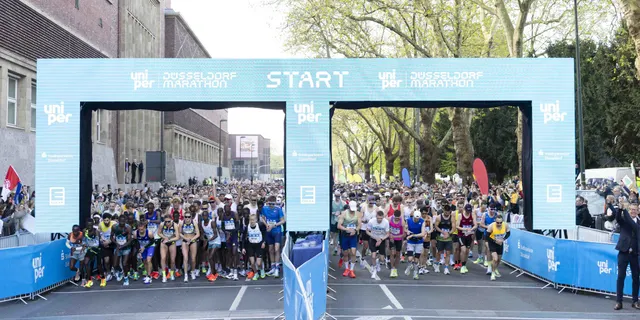
The Uniper Düsseldorf Marathon follows the Rhine, Königsallee and Rheinturm skyline — typically flat and exposed to wind. In 2026, organiser D.SPORTS reported more than 5,000 marathon entries; 4,297 finished. Dmitrii Nedelin won in 2:08:54.
Volksbank Münster Marathon
Since 1996 the Münster Marathon has drawn runners through Germany's cycling capital — the old town and Aasee shape the course. In 2025 the race recorded 3,115 marathon finishers, up 38.8%. Münster is a compact, atmospheric event with strong local roots and is growing faster than many established big-city marathons.
GutsMuths-Rennsteiglauf Marathon
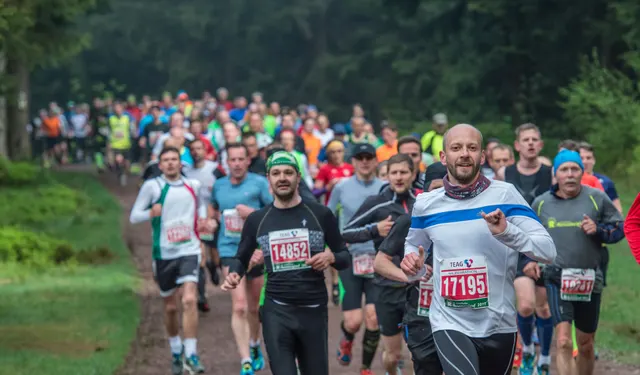
The Rennsteiglauf in Schmiedefeld on the Rennsteig ridge has been one of Germany's oldest mass races since 1973 — originally a 75 km ultra. In 2026, 2,853 runners entered the INTERSPORT marathon and 2,443 finished in Schmiedefeld. Elevation and forest paths demand more than flat city courses.
3-Länder-Marathon
The 3-Country Marathon starts in Bregenz on Lake Constance and crosses Austria, Switzerland and Liechtenstein — a rare border-crossing 42.195 km. Founded in 2000, it attracts mainly DACH runners and has grown double-digit for years. In 2025, 2,114 marathon runners finished — up over 40%. Alpine proximity adds rolling terrain.
Dresdner Sportclub Marathon
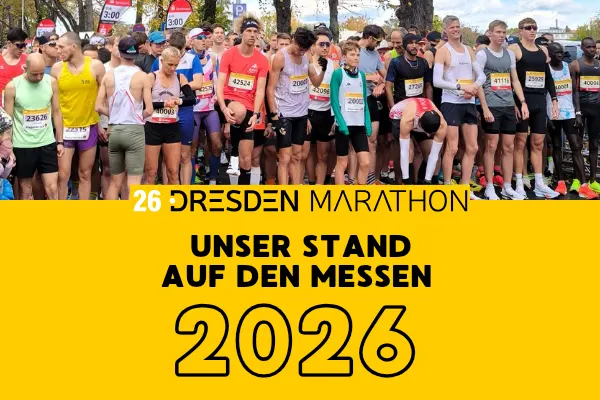
The Dresden Marathon began in 2000 with a few hundred entrants and now follows the Elbe past the Frauenkirche and Semperoper. In 2025 it recorded 2,084 marathon finishers — up 53.2%, the largest percentage gain among Germany's top 20 marathons. The Saxon capital is becoming a rising autumn date in the east.
Generali Bonn Marathon
The Bonn Marathon began in 1980 as one of Germany's first city marathons and today runs from the Rhine via Poppelsdorf to the Posttower finish. In 2026, 2,234 runners entered the marathon distance and 1,649 finished. As a former capital, Bonn combines running tradition with an intimate atmosphere away from the megacities.
SWB Marathon Bremen
The SWB Marathon Bremen is northern Germany's established city marathon — first held in 1987 and finishing downtown today. The flat Weser city suits personal bests; in 2025 marathon finishers rose to 1,635 (+47.7%). Bremen complements Hamburg as the north's second major marathon, though with a smaller elite field.
Freiburg Marathon
The Freiburg Marathon runs through the Green City at the Black Forest edge — cobblestones in the old town and views of the Schlossberg. In 2026 the organiser reported about 18,500 starters across all races; 1,560 finished the marathon distance. Freiburg blends mass participation with sustainability.
Leipzig Marathon
The Leipzig Marathon marked its 48th edition in 2026, crossing the trade-fair city with historic centre and riverside paths. Jakob Lange won on debut in 2:17:43; 1,325 marathon finishers amid a record 14,351 starters across all distances. Leipzig is among central Germany's fastest-growing marathons.
Oberelbe-Marathon
The Oberelbe Marathon follows the Elbe between Dresden and Radebeul — scenic, flat and held in spring. In 2026, more than 9,200 runners entered across all distances; about 1,400 started the marathon and 1,305 finished at the Heinz Steyer Stadium. Lucas Herrmann won in 2:24:45.
Baden Marathon
The Baden Marathon in Karlsruhe has linked the fan-shaped city and Hardtwald since 1984 — the course alternates urban and park sections. In 2025 the organiser counted 1,249 marathon finishers (+40.0%). Karlsruhe sits between Rhine-Neckar and the Black Forest, benefiting from proximity to Frankfurt and Stuttgart without matching their field sizes.
Rhein-Ruhr-Marathon
The Rhein-Ruhr Marathon began in 2003 in Duisburg, crossing the Ruhr — industrial heritage, Rhine and inner harbour shape the course. In 2026 the event drew 9,651 entries across all races; 1,144 marathon finishers reached the Schauinsland-Reisen Arena. Katharina Wehr won for the fourth time in a row.
Einstein-Marathon
The Einstein Marathon in Ulm is named after Albert Einstein — fitting for a city linking science and running culture. The Danube course is mostly flat; in 2025, 1,056 marathon runners finished (+35.6%). Ulm on the Swabian Alb draws entrants from Baden-Württemberg and Bavaria without needing a million-resident metro area.
Metropolmarathon
The Metropolmarathon links Fürth and Nürnberg in the Franconian metro — the course alternates Pegnitz riverside and urban sections. In 2025, 786 marathon runners finished, ranking 20th in Germany. Since the 2000s it has become a regional autumn date in Munich's shadow, growing in importance for Middle Franconia.